Adrienne abandons Paul
Insatiable Box Set: Books 1-4Adrienne abandons Paul when she decides that their engagement cannot provide the intimacy she needs. After Paul insists that they should wait until marriage, she quietly packs her few clothes, leaves him asleep in their apartment, and slips out into the fresh snow with an overnight bag. The departure is both a breakup and a flight from a future that has begun to feel like confinement.
Causes and Background
Adrienne’s dissatisfaction has accumulated beneath the outward compatibility that once helped bring her and Paul together. They share interests in hiking, camping, bicycling, and reading the same books, but she recognizes that shared tastes do not compensate for the absence of sexual and emotional connection. She expected physical compatibility to matter in a marriage, while Paul’s apparent exaggeration of his sexual anatomy and his extremely infrequent desire deepen her sense that the relationship is founded on misrepresentation and disappointment.
The contrast between Adrienne’s appetite and Paul’s behavior becomes especially stark in her observation that she could enjoy sex daily, whereas Paul is a once-a-month partner, if that. His thesis argues that sex before marriage damages marriage, but Adrienne sees the relationship from the opposite direction: a marriage without satisfying intimacy could produce boredom, a dull partnership, and eventual divorce. Her decision therefore arises not from a sudden quarrel but from a conclusion that the engagement has already failed in one of its central promises.
The Departure
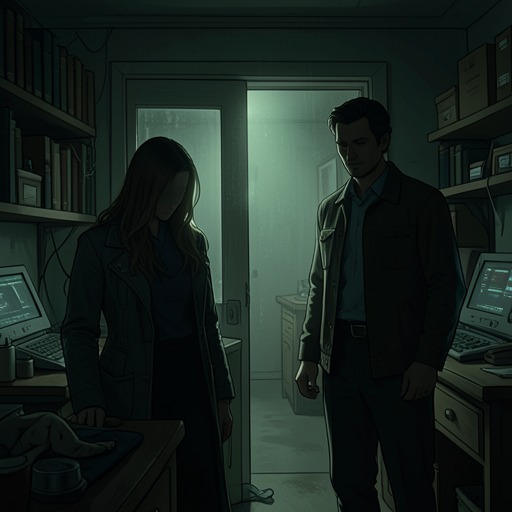
The immediate turning point comes when Paul says it would be advisable to wait until they are married. Adrienne experiences the statement as a reversal of the expectation she associates with conventional courtship, and the narrative presents her response through abrupt physical action rather than negotiation. Paul lies with his back to her in colorful sailboat pajamas; she tiptoes across the floor, gathers her limited clothing, and exits without waking him.
The quietness of the escape matters. Adrienne does not stage a confrontation, seek permission, or wait for a formal dissolution of the engagement. She takes the overnight bag and leaves through newly fallen snow, converting an intimate domestic scene into an act of self-separation. No wedding invitations have been sent, and she believes that little has yet been publicly damaged. The absence of a formal wedding allows her to treat departure as correction rather than catastrophe.
Flight into the Night
Once outside, Adrienne struggles to start her old Honda. The groaning car makes the escape materially difficult, but she persists, aiming east toward home and expecting that Paul might notice her absence only after she is gone. She drives along I-80 toward the Lake Tahoe area, where she lives outside the lake, while darkness, snowfall, elevation, and poor tires turn the journey into a dangerous undertaking.
The trip should have taken two hours from Sacramento, California, but the mountain road stretches it to three. Adrienne inches forward through falling snow at roughly six thousand feet without snow tires, searching for the turn south toward Lake Tahoe while forests close in on both sides. Her decision has given her freedom, but the road immediately tests that freedom against exposure, isolation, and physical risk.
The full moon becomes the clearest emblem of the transition. Adrienne looks up at it in the dead of night and reads it as the beginning of a new life. She drives with the music loud, humming, singing, and swaying as she celebrates freedom from the marriage obligation and from Paul’s dullness. The exhilaration is genuine, yet it exists beside the danger of a woman driving alone through a winter mountain landscape, making the escape a value shift from domestic stagnation toward uncertain independence rather than a simple moment of triumph.
Conflict and Consequences
Paul’s failure to accept or anticipate her departure reinforces Adrienne’s sense that he has been inattentive to her needs. When her phone rings, she refuses to answer, assumes the call is from Paul, and shouts toward her purse that she will not listen. Her taunting reference to whether he has suddenly become sexually aroused exposes the anger beneath the celebratory music: the breakup is driven by accumulated resentment as much as by the desire for a new beginning.
Adrienne’s abandonment of Paul is consequently the first major break in the relationship’s trajectory. It ends the planned marriage before invitations are issued, separates her from the apartment and its routine, and sends her onto a hazardous road toward home. The action also establishes a recurring pattern in her story: when an intimate arrangement becomes intolerable, she acts through flight, but each escape carries her into a more dangerous and consequential environment.
Narrative Significance
As an early plot action, Adrienne’s departure functions as the story’s initiating rupture. The engagement appears socially legible because the couple shares interests and has agreed to marry, yet Adrienne’s private experience reveals that the arrangement lacks the intimacy she considers essential. Her leaving exposes the gap between a relationship that looks reasonable from outside and one that has become unlivable from within.
The scene also places freedom and danger in direct opposition. The moon, loud music, and physical release of driving express Adrienne’s liberation, while the snow, darkness, mountain elevation, weak tires, and unanswered phone insist that liberation has a cost. The old Honda, normally a means of transport, becomes an obstacle that groans and resists her, making the material world register the strain of the decision. Adrienne does not simply reject Paul; she crosses a threshold from a controlled domestic future into an unpredictable wilderness journey, setting the larger narrative in motion.